
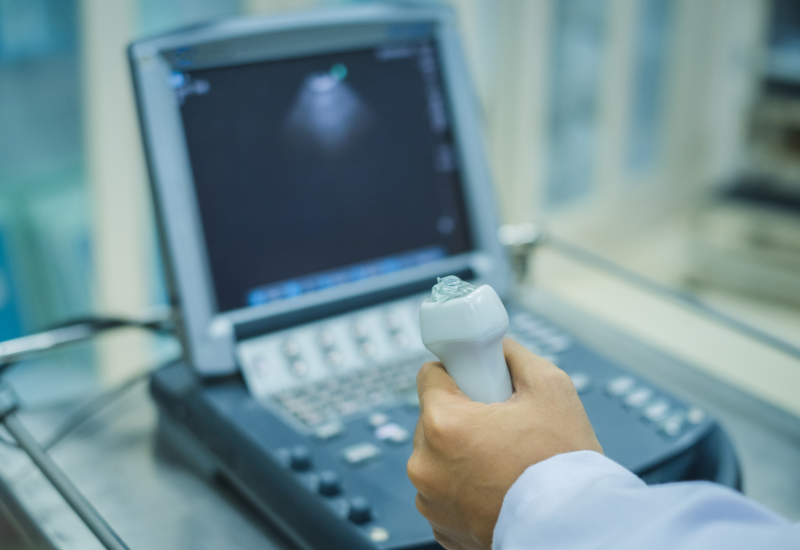
In the past, many hospitals, urgent care centers, and mobile radiology programs relied on generalist radiologists to interpret nearly every study that came through their PACS system. The complexity of imaging was lower. Patient expectations were different. And imaging volume was manageable enough that a generalist’s broad expertise could reliably ensure quality care.
That era is over.
Today’s diagnostic environment is hyper-specialized. Mammography, cardiac imaging, and pediatric imaging—three of the most high-risk, high-impact areas in modern radiology—require an expert eye and advanced subspecialty training. The nuances in these modalities are too detailed, too clinically consequential, and too prone to misinterpretation to rely on generalist-only coverage.
Whether imaging is performed on-site, at a remote satellite location, or as part of a mobile radiology program, hospitals and imaging centers need subspecialty teleradiologists who can deliver accurate, high-quality interpretations around the clock.
This article breaks down why subspecialty teleradiology is now essential infrastructure in mammography, cardiac imaging, and pediatric radiology—and what’s at stake when organizations rely on generalists instead of dedicated experts.
Why Generalist Radiology Models Are No Longer Sufficient
The demand for imaging has exploded across every corner of healthcare. Patients are older, sicker, and more medically complex. Imaging modalities have advanced dramatically—producing more data and requiring deeper knowledge to interpret accurately. And liability pressures on hospitals and radiologists continue to rise.
Generalists play an important role, but they cannot realistically maintain mastery across all modalities. The three areas where this gap is most pronounced—and most dangerous—are mammography, cardiac imaging, and pediatric imaging.
Let’s explore why.
1. Mammography: A High-Risk, High-Demand Specialty Where Precision Cannot Be Optional
Breast imaging is one of the most litigated areas in radiology
Missed breast cancers are among the top causes of malpractice claims involving radiologists. The reasons are well documented:
- Early cancers can be subtle and difficult to detect
- Dense breast tissue creates interpretation challenges
- Screening and diagnostic protocols differ across age groups
- Tomosynthesis has added new layers of complexity
- Predictive value hinges on nuanced pattern recognition
Generalists simply cannot match the experience of fellowship-trained breast imagers who read thousands of mammograms annually.
Subspecialists deliver higher accuracy
Studies consistently show that breast imagers:
- Detect cancers earlier
- Produce fewer false negatives
- Detect more subtle lesions
- Reduce unnecessary callbacks
- Communicate findings more clearly to clinicians
This level of accuracy isn’t just clinically important—it’s operationally and financially essential.
Mobile radiology programs need subspecialists too
Mobile mammography is expanding rapidly to improve access in underserved communities. But without subspecialty reads, these programs face serious risks:
- Reduced diagnostic accuracy
- Higher recall rates
- Delayed diagnoses
- Increased liability
- Lower community trust
Subspecialty teleradiology ensures mobile mammography programs meet the same standard of care as large academic centers.
After-hours support matters
Breast imaging doesn’t stop at 5 p.m. Diagnostic cases, urgent findings, and callback scheduling all require timely interpretation—even on evenings and weekends. Subspecialty teleradiology fills these gaps without forcing hospitals to hire full-time breast imagers.
2. Cardiac Imaging: A Subspecialty Where Lives Depend on Expert Interpretation
Cardiac CT and MRI have become critical tools for diagnosing:
- Coronary artery disease
- Congenital abnormalities
- Cardiomyopathies
- Pericardial disease
- Aortic pathology
- Structural heart disease
These exams require a level of expertise that generalists do not maintain day-to-day.
Cardiac imaging demands advanced training
Cardiovascular radiologists must understand:
- Coronary artery anatomy
- Plaque characterization
- Ventricular function analysis
- Flow dynamics
- Post-surgical changes
- Device and stent interpretation
A generalist may interpret these exams, but the risk of missed or incorrect findings rises significantly.
Subspecialty accuracy improves patient outcomes
A cardiac subspecialist can:
- Identify subtle blockages missed by generalists
- Distinguish artifact from pathology
- Provide advanced functional metrics
- Offer actionable detail to cardiologists
- Shorten time-to-treatment
- Reduce unnecessary follow-up imaging
This expertise directly impacts emergency, inpatient, and outpatient care.
Mobile radiology and cardiac imaging
Mobile CT units are increasingly used in rural hospitals and outpatient settings. Without subspecialty interpretation support, these programs face operational and clinical risks:
- Misinterpreting coronary pathology
- Missing early signs of structural heart disease
- Failing to identify subtle but critical findings
Subspecialty teleradiology allows mobile units to expand cardiovascular access safely and responsibly.
After-hours demand is rising
Cardiac emergencies rarely occur during business hours. Subspecialty cardiac teleradiologists support:
- Stroke protocols
- Chest pain pathways
- Trauma evaluations
- Emergency CT angiography
Hospitals with 24/7 subspecialty coverage see faster decision-making and better care coordination.
3. Pediatric Imaging: The Highest-Sensitivity Specialty in Radiology
Children are not small adults. Their anatomy, physiology, injury patterns, and disease presentations differ dramatically from adults. Pediatric imaging requires a unique combination of technical expertise, clinical insight, and pattern recognition.
Generalists face serious challenges with pediatric studies
Pediatric radiology includes:
- Neonatal imaging
- Skeletal development interpretation
- Pediatric chest and abdomen studies
- Trauma imaging
- Congenital abnormalities
- Rare conditions not typically seen in adults
Generalists may only encounter these conditions occasionally, creating significant potential for misinterpretation.
Radiation safety adds another layer of complexity
Children are more sensitive to radiation, and their imaging protocols must be carefully tailored. Pediatric radiologists help ensure:
- Appropriate technique
- Correct dosing
- Optimal modality selection
- Accurate interpretation with minimal repeat scans
This reduces unnecessary exposure and improves diagnostic accuracy.
Pediatric imaging is highly specialized
Subspecialty pediatric radiologists are trained to recognize:
- Subtle fractures often missed in trauma
- Early signs of congenital disease
- Age-specific normal variants
- Rare conditions that generalists may never encounter
Their expertise reduces both false positives and false negatives.
Remote and mobile radiology programs need pediatric experts
Mobile radiology expands access, but pediatric imaging requires special oversight. Subspecialty reads ensure mobile X-ray and ultrasound units deliver safe, accurate care for children—even in small or rural hospitals without on-site pediatric resources.
Why Subspecialty Teleradiology Is Becoming Essential Infrastructure
Hospitals and imaging centers increasingly recognize that subspecialty reads are not optional—they are fundamental to safe, high-quality imaging.
1. Subspecialty reads reduce risk
Fewer missed findings, fewer addenda, fewer discrepancies, fewer liability exposures.
2. Subspecialists increase clinician trust
Referring physicians rely on radiologists for clarity. Subspecialty reports improve clinical decision-making and treatment accuracy.
3. Faster turnaround times improve flow
24/7 subspecialty teleradiology supports:
- Emergency departments
- Trauma centers
- Mobile radiology programs
- Rural hospitals
- High-volume outpatient centers
Predictable turnaround times stabilize operations across the care continuum.
4. Subspecialty expertise improves reimbursement
Correct documentation and accurate CPT assignment reduce denials and support stronger billing.
5. It is increasingly required for accreditation
Organizations such as the ACR expect subspecialty coverage for certain modalities—especially mammography and advanced cardiac imaging.
Why Mobile Radiology Programs Depend on Subspecialty Teleradiology
The mobile radiology sector is expanding rapidly—especially in rural, underserved, and community-based environments. But mobile imaging must meet the same diagnostic standards as hospital-based imaging.
Subspecialty teleradiology enables mobile programs to:
- Offer mammography, CT, and pediatric imaging confidently
- Reduce follow-up calls and repeat exams
- Expand reach without compromising accuracy
- Deliver hospital-grade interpretations anywhere
- Maintain consistency even across multiple mobile units
- Support referring clinicians with immediate consults
In many regions, subspecialty teleradiology is the only way mobile programs can safely deliver advanced imaging at scale.
What to Look for in a Subspecialty Teleradiology Partner
Hospitals and imaging programs evaluating teleradiology partners should prioritize:
- Fellowship-trained subspecialists (breast, cardiac, pediatric, MSK, neuro, body)
- 24/7/365 coverage
- Guaranteed turnaround times
- Seamless integration with PACS/RIS/EHR
- Strong quality assurance programs
- Direct access to radiologists for consultations
- Performance reporting and transparency
- Experience supporting mobile radiology operations
A strong partner becomes a true clinical extension of your organization.
Strengthen Your Imaging Program With Advanced Telemed Services
Subspecialty imaging is not optional—it is the new standard of care. Whether your organization is a hospital system, outpatient imaging center, urgent care network, or mobile radiology program, expert interpretation is essential for accuracy, safety, and operational efficiency.
Advanced Telemed Services provides 24/7 U.S.-based subspecialty teleradiology across mammography, cardiac imaging, pediatric radiology, neuroradiology, MSK imaging, and more. Our teams deliver fast turnaround times, detailed reporting, and seamless communication with your clinicians—ensuring your imaging program meets the highest standard of care.
If your organization is ready to elevate diagnostic accuracy and guarantee expert interpretation anytime, anywhere, we’re here to help.
Reach out today for a quote and learn how Advanced Telemed Services can support your hospital or mobile radiology program with reliable, subspecialty teleradiology.
Ready for a Partner Who’s Always On Call?
Let’s explore how Advanced Telemed Services can support your hospital with 24/7, high-quality radiology reads—delivered by real people who care about your outcomes.